
Lighting Haiti's Future through Solar Energy A lifelong mission to electrify Haiti, from Ground-Up
The Story
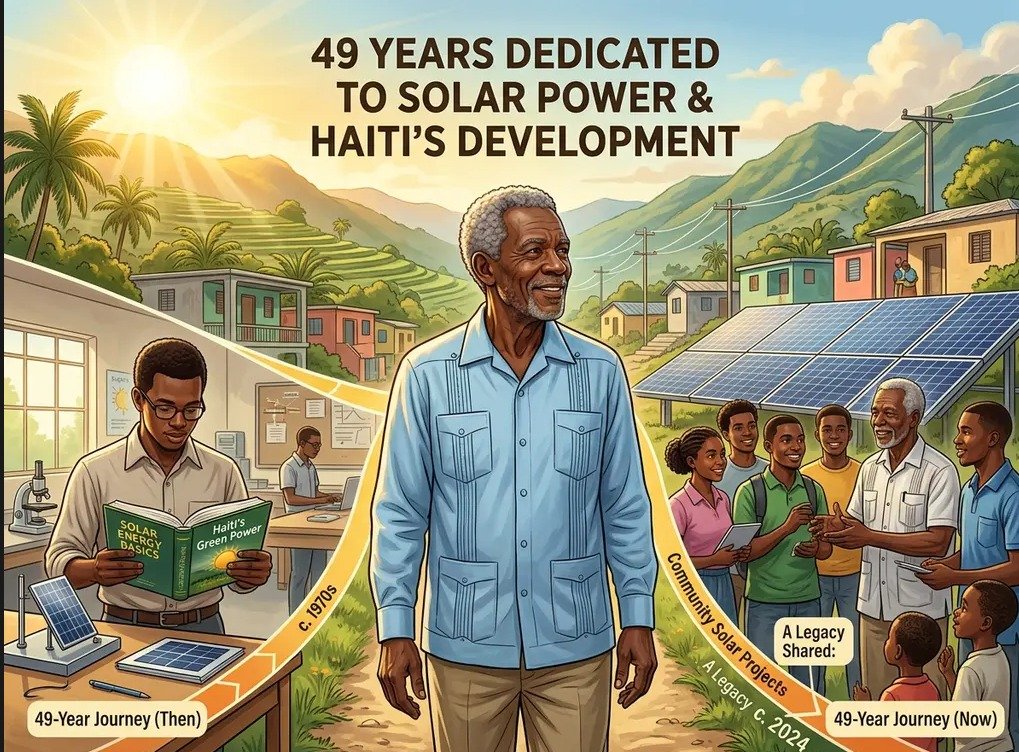
For nearly five decades, I have dedicated my life to the promise of solar energy and its power to transform Haiti. Since first discovering this technology in college 49 years ago, I have pursued one unwavering goal: to help electrify my native country through sustainable, accessible, and community‑driven solutions.
Today, at 74, I remain committed to advancing a bottom‑up electrification strategy built on a resilient franchise business model,one capable of empowering local communities, expanding economic opportunity, and ensuring long‑term energy independence.
Though I may not live to witness a fully electrified Haiti, I work with confidence and purpose, knowing that this mission can be carried forward by future generations. My legacy is the belief that renewable energy can light every home, strengthen every community, and inspire a brighter future for Haiti.
What is Solar Energy
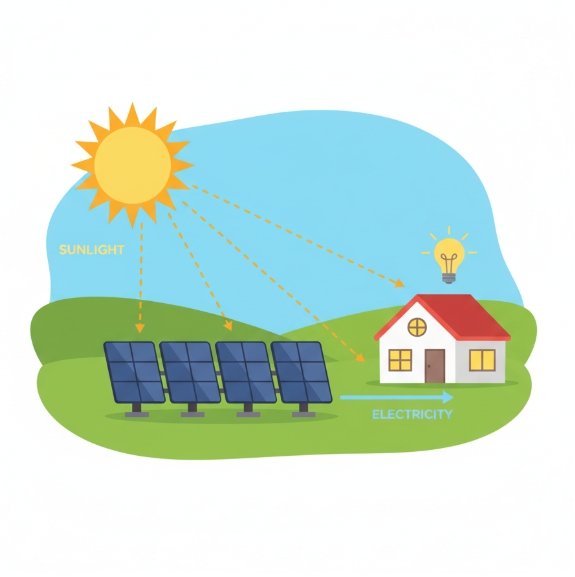
Solar energy is the power we get from the sun. When sunlight hits solar panels, the panels convert that light into electricity. This electricity can be used to run lights, charge phones, power homes, businesses, pumps, schools, and much more.
Key points:
- The sun provides free, abundant energy every day
- Solar panels turn that sunlight into usable power
- Batteries can store extra energy for night‑time or cloudy days
- Solar systems work without fuel, smoke, or pollution
Solar energy is especially useful in sunny countries like Haiti, where sunlight is available almost all year round.
Bottom Up Electrification Explained

Why a Bottom‑Up Strategy Is the Best Long‑Term Solution for Haiti
A bottom‑up electrification strategy builds the energy system from local communities upward instead of depending on one large, centralized grid. This approach is especially effective for a country like Haiti for several reasons:
1. Fast Access to Electricity
Large national grid projects can take decades and require billions of dollars. Bottom‑up systems allow villages, towns, and neighborhoods to get power quickly through small solar systems or mini‑grids.
2. Independence From Government Instability
Haiti faces political and economic challenges. Small, community‑run solar systems do not depend on a central authority. Even if the national system fails, local systems keep running.
3. Lower Cost and Higher Reliability
Solar mini‑grids and home systems cost less to build and maintain than a national grid. They also break less often because they are simpler and closer to the users.
4. Economic Empowerment
Local technicians, entrepreneurs, and energy shop owners can operate and maintain these systems. This creates jobs and keeps money circulating in the community.
5. Scalable Growth
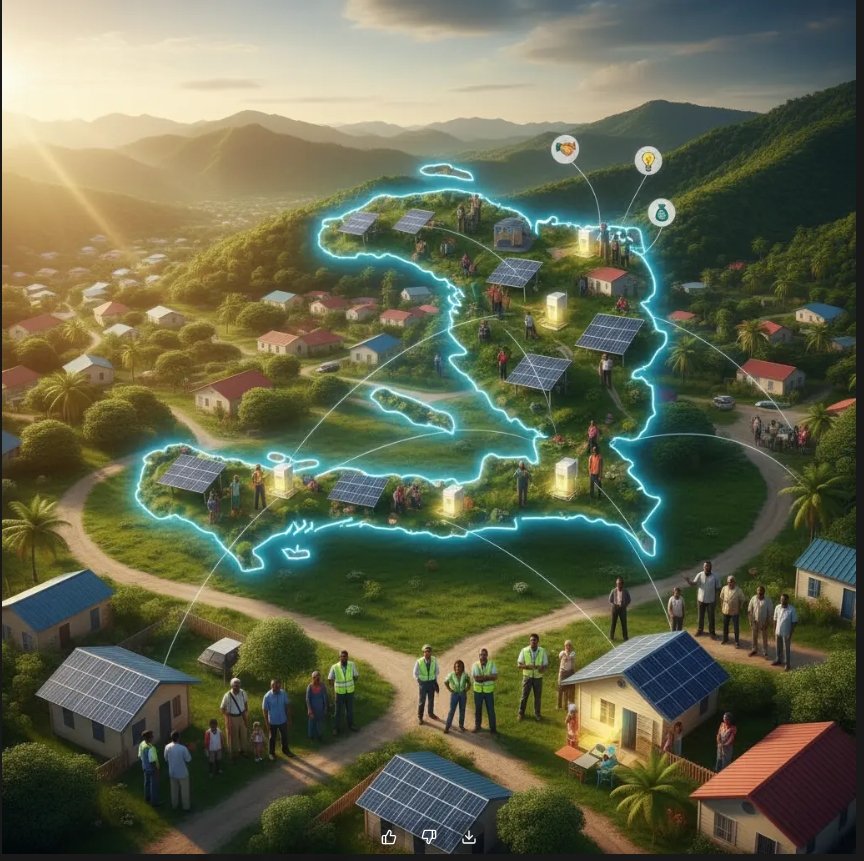
Small solar systems can connect together over time. What starts as one village with solar power can expand into a network, eventually building a strong national energy system from the ground up.
6. Resilience Against Natural Disasters
Haiti is vulnerable to hurricanes and earthquakes. A centralized grid can collapse, but many small, distributed systems can survive and bounce back faster.
In simple terms:
A bottom‑up solar strategy lets Haiti grow its energy system the same way a tree grows—starting from strong roots in local communities. It is affordable, reliable, and built to last for generation.
The Franchise Solution for Haiti
A franchise business model is a system where one person or company (the franchisor) creates a successful business idea, and then other people (franchisees) can buy the right to operate that same business in their own community. They follow the same brand, rules, training, and methods so the quality stays consistent everywhere.
Simple example:
It’s like planting many identical seeds from the same tree. Each seed grows in a different place, but all produce the same fruit.
How a Franchise Model Helps Achieve Nationwide Electrification
1. Rapid expansion
Instead of one organization trying to electrify the entire country alone, many trained franchise owners can operate solar businesses all over Haiti. This speeds up growth dramatically.
2. Local ownership and pride
Franchisees are local entrepreneurs. When people own and operate the systems in their own community, they take better care of them and the benefits stay in the area.
3. Consistent quality
Every franchise follows the same technical standards, training, and service guidelines. This ensures safe, reliable solar installations across the country.
4. Job creation
Each franchise creates work for technicians, operators, salespeople, and customer support staff. This builds local expertise and strengthens the economy.
5. Self‑sustaining system
Once the franchise network is established, it continues growing even without the founder present. Your vision becomes a system that future generations can carry forward.
6. Scalable nationwide impact
A network of solar franchises,where each serving homes, businesses, and villages, can slowly connect and form a nationwide bottom‑up energy grid.
In simple terms:
A franchise model turns your idea into a movement. It trains and empowers many local people to spread solar power across Haiti, allowing your dream to grow far beyond what one person could do alone.
Electrification as Economic Foundation
Why Electricity Is the Foundation of Haiti’s Economic Growth
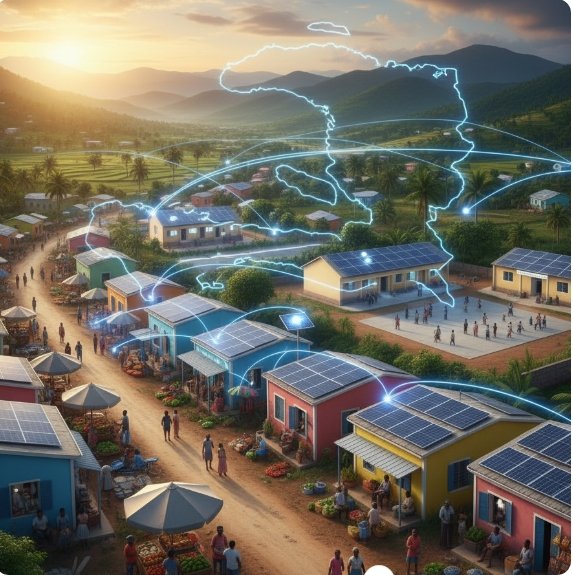
Electricity is not just a convenience , it is the engine that powers modern life. For Haiti, reliable electricity would unlock progress in every sector of society. It is the key that allows everything else to grow.
1. Businesses Can Operate and Expand
Without electricity, businesses struggle or cannot exist at all. With reliable power:
- Shops can stay open longer
- Manufacturers can run machines
- Farmers can process and store food
- Small enterprises can grow into larger ones
Electricity opens the door to new industries and more jobs.
2. Education Improves
Light in schools and homes means students can study at night. Computers and internet access become possible. Better education leads to a skilled, productive workforce.
3. Healthcare Gets Stronger
Hospitals need electricity for:
- Refrigerating vaccines
- Running medical equipment
- Providing lighting and clean water
- Saving lives during emergencies
Better healthcare means a healthier, more productive population.
4. Jobs Are Created Everywhere
Electrification itself creates jobs for technicians, installers, operators, entrepreneurs.
But once electricity is available, many more types of jobs become possible.
5. Reduced Poverty
Electricity lowers daily costs. Families no longer need to buy expensive fuel, candles, or generators. With savings and new job opportunities, poverty decreases.
6. Modern Technology Becomes Accessible
Internet, mobile payments, computers, and modern tools only function with electricity. These technologies help people learn, connect, earn, and innovate.
7. Attracting Investment
No investor wants to build a factory or open a company where power is unreliable. Electrification makes Haiti attractive to both local and international investors.
8. Community Stability and Safety
Electricity provides street lighting, communication, and a sense of security. Safer communities support economic activity and social stability.
In simple terms:
Electricity is like planting roots for a tree. Without strong roots, nothing can grow.
With reliable power, Haiti can grow businesses, educate youth, improve health, create jobs, reduce poverty, and build a stable, modern society. It is the foundation upon which the entire economy can rise.